Web Performance: Why Speed Quietly Wins (or Loses) Customers
Core Web Vitals aren't just a Google checkbox — they're a proxy for how your site feels. Here's what FCP, LCP, TBT, and CLS mean in plain language, and why they decide whether visitors stay.
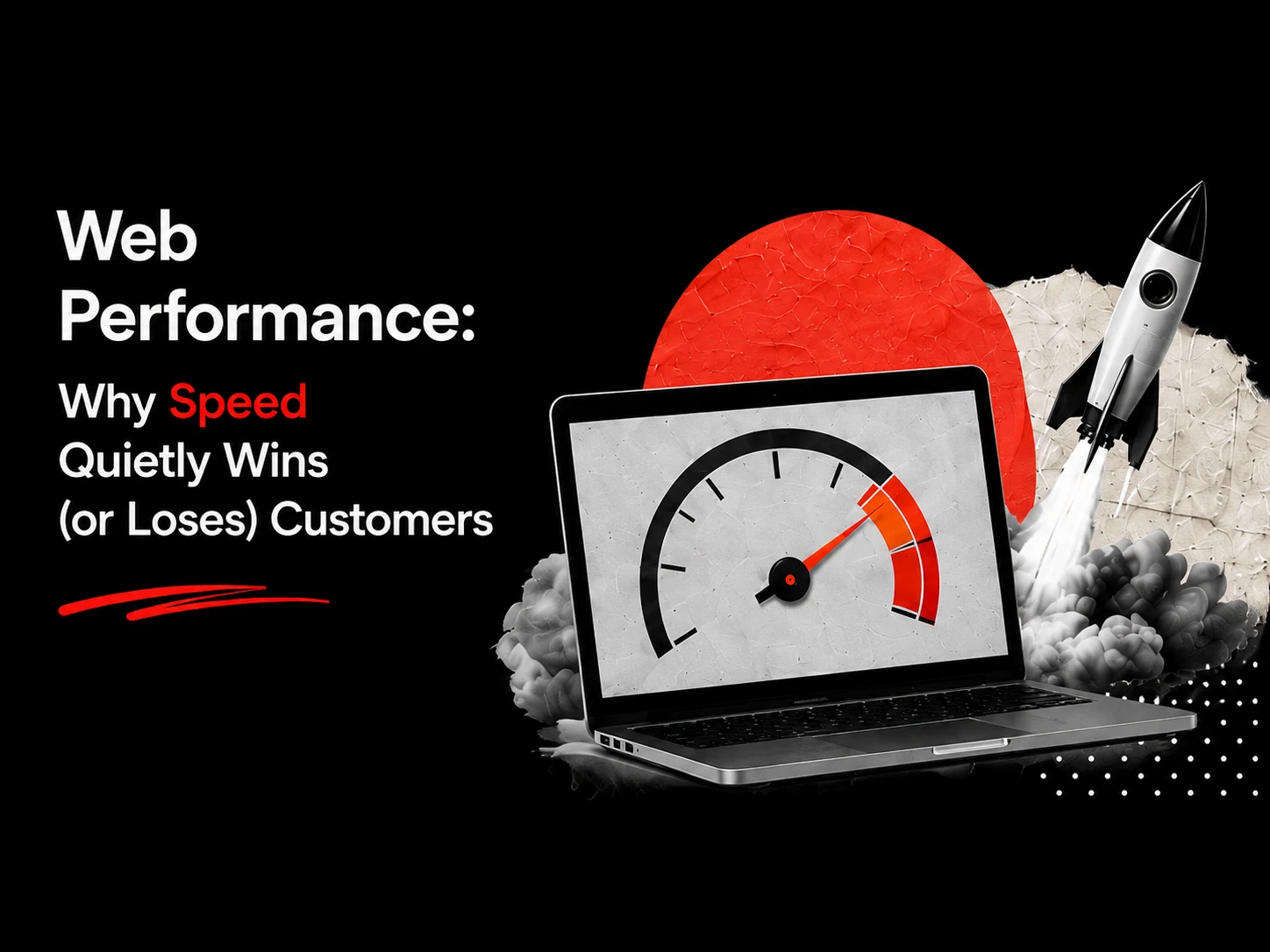
Visitors don't read your performance report — they feel it. A site that paints instantly and responds the moment they tap feels trustworthy. One that hangs, jumps, and stalls feels broken, no matter how good the design is. Google measures this with Core Web Vitals, and so should you.
The metrics, in plain English
- First Contentful Paint (FCP) — how fast something useful appears. Long blank screens lose people.
- Largest Contentful Paint (LCP) — when the main content is visible. This is what 'loaded' feels like.
- Total Blocking Time (TBT) — how long the page is frozen and ignores taps because JavaScript is busy.
- Cumulative Layout Shift (CLS) — how much the page jumps around as it loads. Nothing is more annoying than tapping the wrong button.
Where speed usually goes to die
Heavy JavaScript shipped up front, render-blocking fonts, unsized images, and effects that run before the page is even usable. The fix is rarely a single switch — it's deferring what isn't needed for the first paint, sizing everything so nothing shifts, and serving modern, compressed assets.
Performance is a feature. It's the one every single visitor experiences, whether they notice it or not.
We build sites that stay fast under real conditions — slow phones, weak networks, impatient users. Because the fastest site in the room usually wins the customer.
Have a project in mind?
We turn ideas like the ones above into shipped software. Tell us what you're building.